

May 6, 2026 / Courtlyn Saxby
How to Audit Your Trade CRM Integrations to Find Your True Marketing Cost-Per-Lead
Home /

If you sit down with a digital marketing agency to review your monthly campaign performance, they will inevitably hand you a sleek, colorful dashboard packed with technical advertising metrics. They will highlight surging impression volumes, growth in total website clicks, and dropping costs-per-action across your contact forms.
While these metrics are important for tracking top-of-funnel engagement, they don’t tell you the real story of your business health. Clicks and form submissions don’t pay your field crews or purchase vehicle wraps; only cleared invoices do.
Many home service business owners are flying completely blind when it comes to tracking their true marketing return on investment. They measure digital performance through isolated web analytics platforms while managing their real-world operations inside trade CRM systems.
If these two software ecosystems are not deeply integrated, your marketing budget is operating on guesswork. To build a highly scalable trade business, you must execute a comprehensive integration audit to connect your digital campaigns straight to your real-world invoiced revenue.
The Vanity Metric Trap: Why Web Conversions Lie
To build an accurate marketing pipeline, you must first understand the disconnect between a standard web conversion and a profitable service call. When a web user completes a contact form on your site or clicks a tracking number, your web analytics platform registers a successful conversion.
However, consider how that conversion actually translates to your real-world field operations:
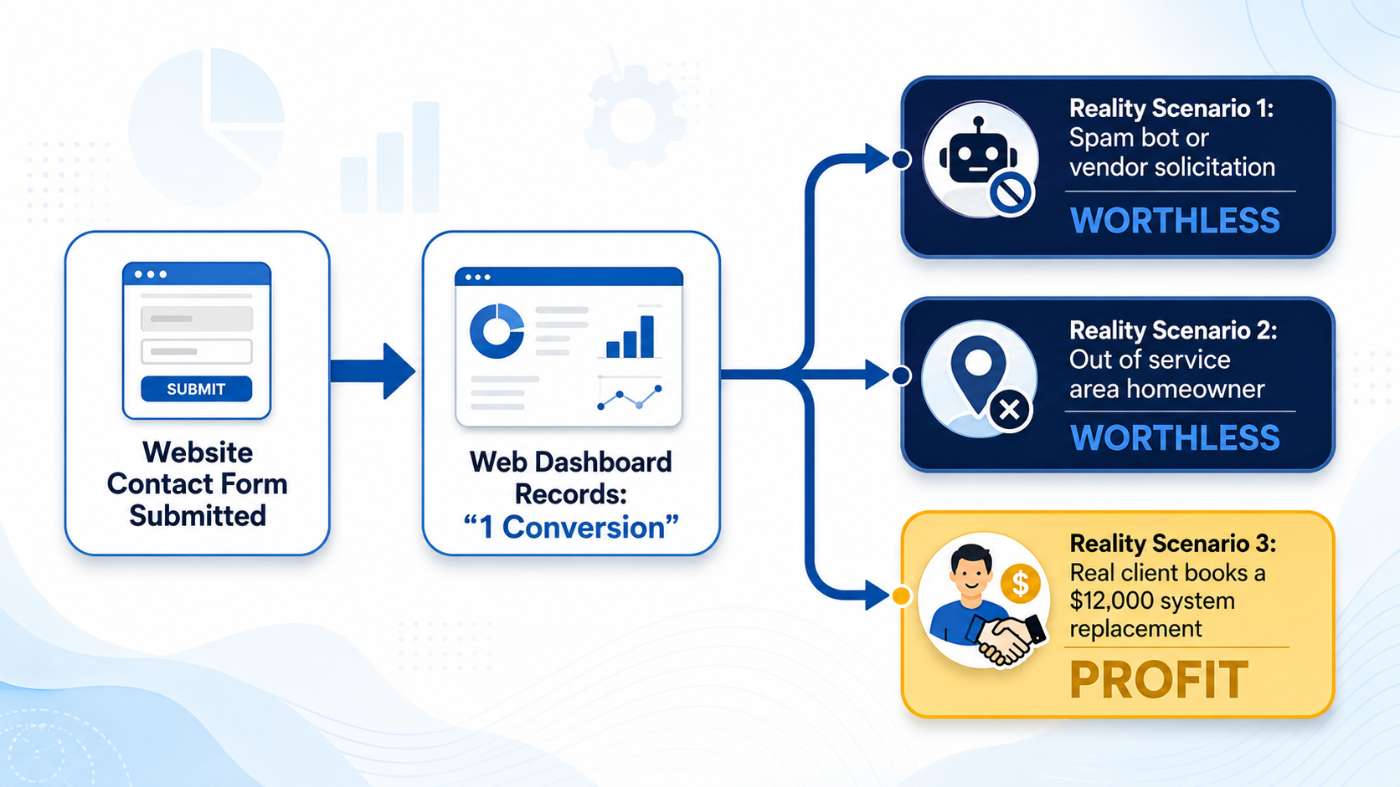
If your marketing firm only tracks raw web conversions, they treat all three of these scenarios the same. They might optimize your ad budgets to generate more volume based on Scenario 1 or 2 because those spam leads are cheap to acquire. As a result, your marketing reports look amazing on paper, but your actual revenue continues to decline.
Step-by-Step Audit Framework for Closed-Loop Trade Analytics
Connecting your marketing data directly to your operational CRM requires establishing a closed-loop data tracking system that follows a lead from the initial Google search click all the way to the final cleared invoice.

Step 1: Audit and Align Your Call Tracking Infrastructure
Do not use a single, static office phone number across your entire digital presence. Implement a dynamic number insertion (DNI) call tracking system on your website. This framework automatically displays a unique tracking phone number to every visitor based on how they found your business (e.g., separating traffic from Google Organic, Google PPC, Local Services Ads, and Facebook Ads). Ensure that when these tracking lines route calls to your office, they pass the user’s unique digital tracking data directly into your dispatch dashboard.
Step 2: Establish Direct API Triggers Between Web Forms and Your CRM
Stop allowing website contact form entries to sit in a generic email inbox where dispatchers have to manually copy and paste client details into your scheduling software. Build direct API integrations that automatically push web form entries straight into your trade CRM as an unbooked job file. This direct link ensures that the unique digital source tracking codes remain permanently attached to that customer’s file through the entire operational lifecycle.
Step 3: Configure Revenue Mapping Triggers
The final step in your data audit is configuring your systems to send conversion data back to your advertising accounts when a job is completed. When a technician finishes a service call in the field, collects payment, and closes out the invoice inside your CRM, that financial milestone must trigger a data signal that travels back to your Google Ads account. This closed-loop loop trains the ad platform’s machine-learning bidding algorithms to hunt for consumers who match your highest-paying completed jobs, rather than just chasing cheap form submissions.
Shift Your Strategy from Cost-Per-Click to True Cost-Per-Job
Executing a comprehensive data and CRM integration audit completely shifts how you manage your business growth. You move past evaluating marketing performance through vanity metrics and begin making strategic adjustments based on real financial numbers.
You will quickly discover exactly which ad groups drive low-margin service calls and which campaigns secure your highest-ticket installations and system replacements. This clean data transparency allows you to confidently cut underperforming campaigns and aggressively fund the marketing channels that drive maximum bottom-line revenue.
Frequently Asked Questions
Can I integrate call tracking numbers with specialized trade software like ServiceTitan?
Yes, modern call tracking platforms offer deep, direct integrations with major home service software systems like ServiceTitan, Housecall Pro, and Jobber. When an inbound call arrives, the integration automatically matches the tracking profile and populates the client’s information directly within your dispatch dashboard.
What is Dynamic Number Insertion (DNI) and how does it protect my local website design data?
DNI is a script configuration that dynamically switches out the displayed phone numbers on your website based on the specific traffic source that brought the user to your site. It keeps your primary core business phone number safe in the background while allowing you to trace every inbound call back to its exact ad group or organic keyword source.
How does setting up CRM tracking directly improve my automated Google ad bidding?
When your trade CRM feeds verified, invoiced revenue values back into your Google Ads network, it provides the bidding algorithm with clear financial data. The system uses this loop to stop chasing empty form submissions and focus its automatic bidding power on users whose search behaviors match your most profitable historical jobs.
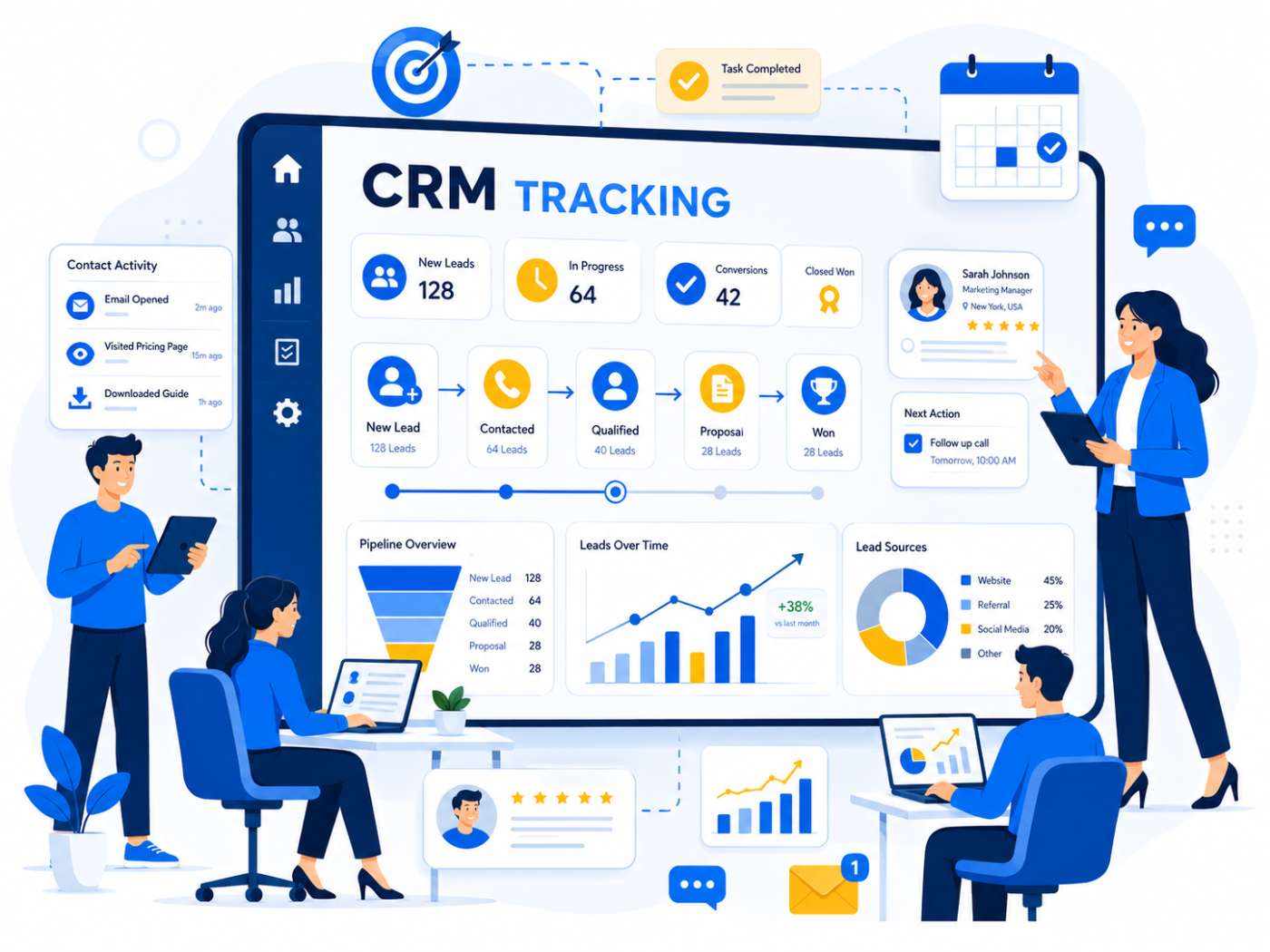
Connect Your Marketing straight to Your Invoices
Stop guessing which digital marketing campaigns are actually generating profit for your business. By breaking down the data wall between your website analytics and your operational trade CRM, you can protect your cash flow and scale your business with total precision.
Take control of your business analytics. Contact Real Time Marketing today to schedule a comprehensive CRM tracking and integration audit. Our technical marketing specialists will connect your digital funnels straight to your field dispatch boards, ensuring every single marketing dollar delivers verifiable revenue.