

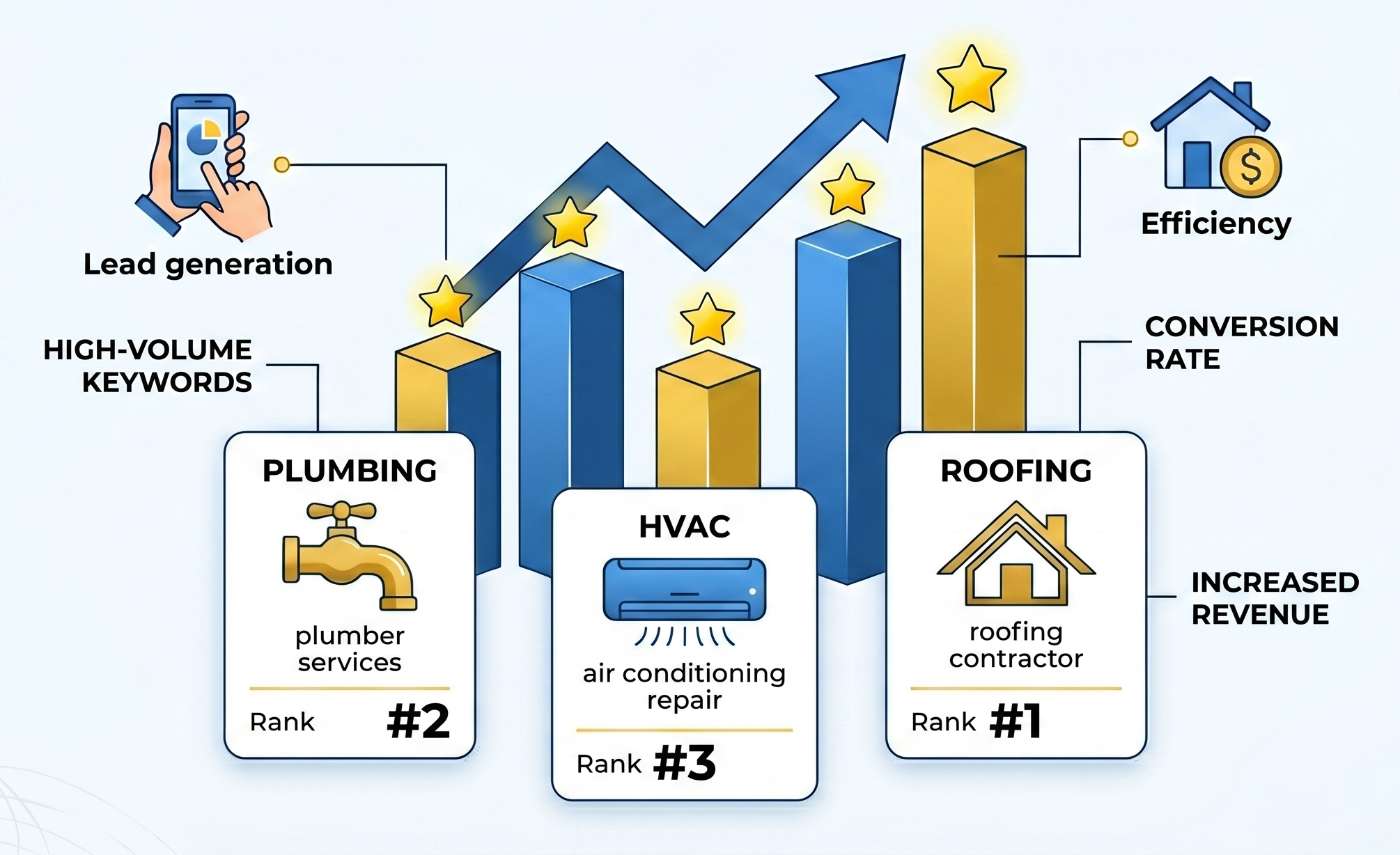
For local home service providers running paid search campaigns on Google Ads, selecting the correct keyword matching strategy is often the difference between a highly profitable truck schedule and a completely drained marketing budget.
Many business owners dive into their ad accounts, select a series of core industry terms like “AC repair” or “roofing contractor,” and leave Google’s default targeting parameters untouched.
This oversight is incredibly costly. Over the past several years, Google has significantly altered how its ad network interprets user search queries, blending traditional keyword configurations with predictive AI layers. If you run your paid search campaigns without a clear understanding of the operational trade-offs between Broad Match and Exact Match parameters, you will inevitably spend thousands of dollars paying for junk traffic, wrong numbers, and low-margin inquiries. Here is the operational blueprint for structuring your keyword match settings to maximize your lead efficiency.

Broad Match: The High-Volume Smart Bidding Engine
Broad Match is Google’s default keyword configuration setting. When you input a keyword under Broad Match targeting, your ads are eligible to display for any search query that Google’s algorithm believes is conceptually related to your primary term.
The Strategic Opportunities
In the modern search environment, Broad Match is no longer a simple keyword matching tool; it functions as a broad data collection engine powered by smart bidding algorithms. Broad Match allows your campaigns to discover unique, long-tail search phrases that you might never have thought to target manually. It provides immense keyword flexibility and allows your ad budget to scale quickly when truck capacity is high.
The Financial Realities
If you run Broad Match keywords without activating advanced automated bidding strategies or maintaining a massive, comprehensive negative keyword list, your budget will bleed out fast. Because Broad Match prioritizes conceptual relations, a keyword like “plumber” can easily trigger your ad when someone searches for “plumbing apprenticeship requirements” or “free DIY drain cleaning tips.” You pay full price for those empty website clicks, destroying your campaign ROI.
Exact Match: The High-Precision Lead Capture Tool
Exact Match provides the highest level of targeting control within the Google Ads ecosystem. Historically, Exact Match meant your ad would only display if a user typed your precise keyword phrase into the search box. Today, Google has expanded Exact Match to include close variants (misspellings, singular or plural forms, and reordered words) while keeping the underlying search intent identical.
The Strategic Opportunities
Exact Match is built for maximum budget efficiency and conversion precision. When you target high-ticket keywords under an Exact Match framework (such as “tankless water heater installation company”), you know with near certainty that the user viewing your ad has an immediate, specific need for that exact service. This precision yields exceptional conversion rates on your landing pages and prevents your budget from being wasted on informational or low-margin DIY queries.
The Operational Constraints
The main limitation of a strict Exact Match strategy is its lack of scalability. Exact Match limits your visibility to specific, pre-determined search phrases, meaning you miss out on new, conversational long-tail queries that modern users enter via voice search or AI search layers. If your market experiences a sudden drop in specific exact search volume, your lead flow can slow down significantly.
Constructing a High-Yield Hybrid Ad Account Structure
To maximize your paid search performance, you should avoid relying on a single keyword match type. Top-performing home service campaigns deploy a balanced, hybrid ad account configuration that leverages the strengths of both frameworks:
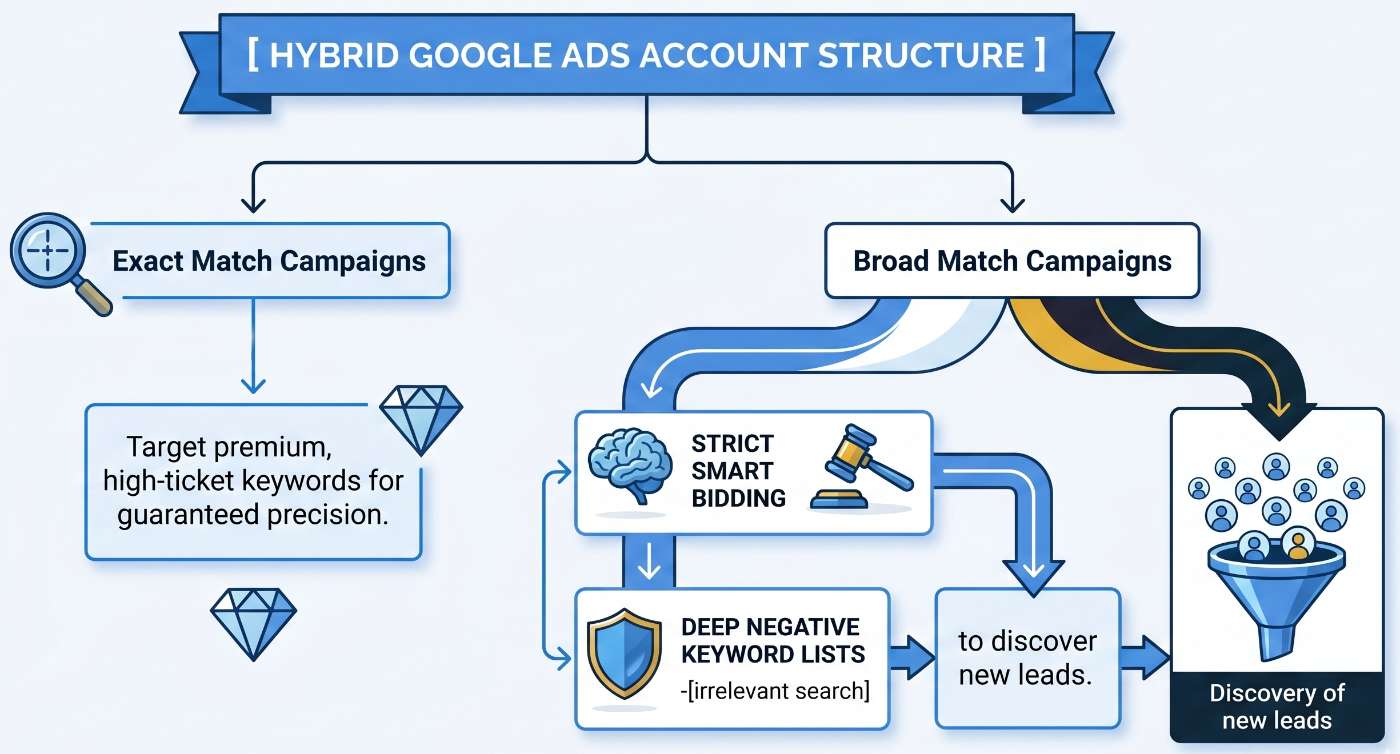
Deploy high-precision Exact Match campaigns to target your most profitable, high-ticket services (such as full system replacements, complete repipes, or commercial panel upgrades), ensuring you capture premium leads with zero waste.
Concurrently, run separate, controlled Broad Match campaigns to discover new search trends and long-tail leads. Crucially, lock these Broad Match ad groups into Google’s advanced smart bidding frameworks (such as Maximize Conversions with a strict target cost-per-acquisition cap) and back them up with a robust, multi-layered negative keyword library. This infrastructure allows the AI to hunt for new lead variations while protecting your budget from irrelevant clicks.
Frequently Asked Questions
How does a negative keyword list protect a Broad Match ad campaign?
A negative keyword library acts as a strict exclusion filter for your ad targeting. By adding terms like “jobs,” “training,” “DIY,” “parts,” and “wholesale” to your negative list, you instruct Google’s ad distribution engine to never show your ads for those specific queries, safely cleaning up your Broad Match lead flow.
Should a brand-new home service business launch with Broad Match or Exact Match?
New businesses with tight starting budgets should begin with a focus on Exact Match and Phrase Match keyword structures. This approach minimizes financial risk and ensures your initial capital is spent exclusively on high-intent consumer intent while you gather baseline conversion metrics.
How frequently should I audit my campaign search term reports for keyword variations?
Treat your search term records as a live operational log. During the initial month of a campaign, audit your search terms multiple times per week to identify and block rogue keyword variations. For mature campaigns, a comprehensive bi-weekly review is typically sufficient to keep performance optimized.
Maximize Your Advertising Efficiency
Stop letting confusing ad settings drain your hard-earned marketing resources. By structuring a strategic, dual-threat keyword match framework backed by precision smart bidding and continuous asset optimization, you can dominate the paid search space in your market.
Take total control of your paid acquisition pipeline. Contact Real Time Marketing today to schedule a comprehensive review of your local ad accounts. Our home service PPC specialists will eliminate your wasted ad spend, optimize your keyword networks, and make sure your budget drives real, high-margin service calls.