

Apr 8, 2026 / Courtlyn Saxby
LSA vs. Google Ads: Which Should Your Home Service Business Run First?
Home /
When a home service contractor (whether you run an HVAC dealership, a plumbing firm, or a roofing company) decides to allocate a portion of their hard-earned revenue toward digital advertising, they immediately run into a critical tactical decision: should they invest in Google Local Services Ads (LSAs) or traditional Google Pay-Per-Click (PPC) Ads?
This decision can easily stall your momentum. Many local home service companies build strong local map positions but find themselves completely squeezed out of broader high-margin service keywords by large regional or national franchises with massive marketing budgets. To break through this barrier and maximize every dollar of your marketing spend, you must understand the exact operational mechanics, cost structures, and scalability limits of both advertising platforms. Here is the definitive roadmap for choosing where to deploy your ad dollars first.

Google Local Services Ads (LSAs): The Low-Risk Pay-Per-Lead Model
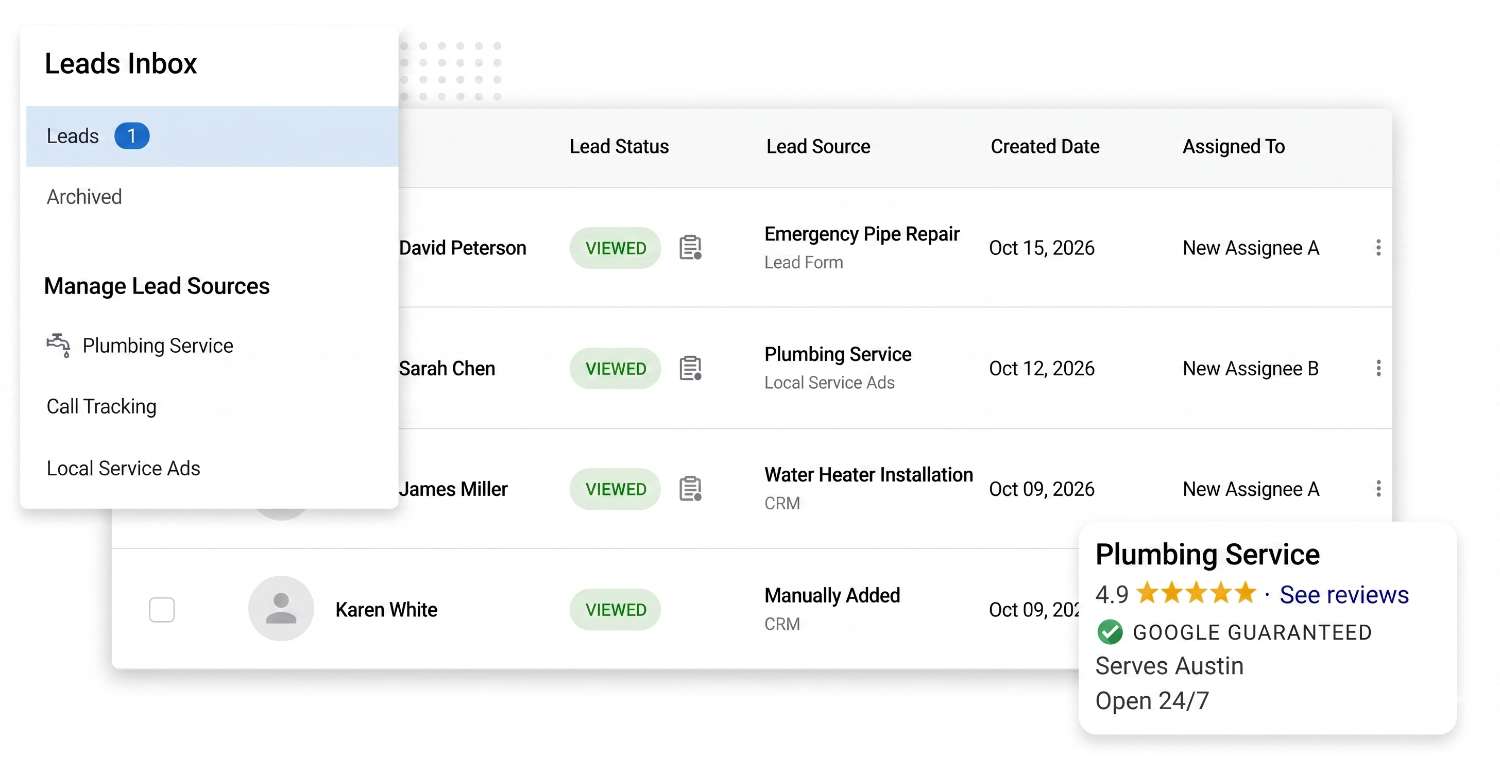
Google Local Services Ads appear at the absolute apex of search results, resting above every other link on the page. They display your company name, star rating, total review count, operating hours, and the highly trusted Google Guaranteed badge.
The Core Advantage
The primary benefit of LSAs is its near-zero risk profile for new advertisers. Because the platform runs on a pay-per-lead structure, you are entirely insulated from paying for empty website traffic. If a user clicks your profile, browses your information, and exits without calling your office, you pay Google exactly zero dollars. You only incur a charge when a consumer initiates a direct phone conversation or submits a booking request through the portal.
The Operational Constraints
While LSAs are an exceptional tool for locking in a stable stream of baseline service calls, the platform offers very little strategic control. Google completely automates your keyword targeting and ad creative. You cannot write custom promotional headlines, you cannot build targeted landing pages to boost conversions, and your visibility is strictly capped by your physical office proximity and your local review volume.
Traditional Google Ads: The High-Control Pay-Per-Click Powerhouse
Traditional Google Ads sit directly beneath the LSA banner and are designated by a bold Sponsored or Ad tag. This platform operates on a pay-per-click model, meaning you are billed the moment a user selects your link, regardless of whether they call your office or instantly leave your page.
The Core Advantage
Traditional Google Ads grant you total tactical control over your digital acquisition funnel. You decide exactly which high-ticket keywords you want to target, such as “commercial VRF system installation” or “complete slate roof replacement”, allowing you to bypass low-margin service inquiries entirely. Furthermore, you can send that traffic to custom-designed, high-converting landing pages built with targeted promotional offers, financing options, and video testimonials.
The Operational Constraints
Because you pay for every single click, traditional PPC demands a highly optimized, professional sales funnel. If your website loads slowly, looks outdated, or lacks clear contact forms, you can easily exhaust a hefty ad budget over a weekend without booking a single job. Additionally, competing against national brands for high-volume keywords requires expert bid management and continuous campaign optimization to prevent your cost-per-click from skyrocketing.
Strategic Platform Comparison
To understand how these platforms match up, look at their core traits side by side. Local Services Ads follow a Pay-Per-Lead model where you only pay for direct calls, texts, and bookings. Traditional Google Ads run on a Pay-Per-Click model where you are billed for every website visit.
LSAs require a high level of upfront verification, including background and license checks, while traditional PPC lets you launch campaigns almost instantly. In terms of creative control, LSAs use an automated template by Google, whereas traditional ads offer fully customizable headlines and landing pages. Finally, LSAs have a scalability limit capped by your regional review volume and location, while traditional PPC offers unlimited scaling tied directly to your ad budget.
The Tactical Framework: Which Should You Run First?
The ideal advertising framework for your home service business depends entirely on your current operational stage, your background verification status, and your immediate capacity needs.
Step 1: Secure Your Base with LSAs. If you are a growing contractor looking to establish a reliable baseline of service leads with minimal financial risk, launch Google Local Services Ads first. The pay-per-lead model provides a safe environment to keep your technicians busy while you build your local brand presence.
Step 2: Layer on Traditional PPC to Scale High-Ticket Services. Once your LSA campaigns are stable and you find yourself needing to target specific, high-margin installation and replacement jobs to hit your growth targets, layer on a traditional Google Ads campaign. This gives you the control required to out-maneuver national competitors on profitable key phrases and fill your sales pipeline with premium installation projects.

Frequently Asked Questions
Which platform requires a bigger monthly budget to maintain high performance?
Traditional Google PPC demands a higher financial runway because you are paying for keyword website clicks across open match options. LSAs can be operated on smaller, flexible structural limits because you are strictly billed when a customer commits to an active inbound call or direct message.
Can a business use both LSAs and traditional text advertisements simultaneously?
Yes, this represents the gold-standard approach for residential market scaling. Running both channels concurrently locks in double the real estate at the top of search screens, making your local trade brand the clear choice before consumers scroll down to organic links.
What happens to my LSA placement if my office cannot answer a phone call?
Missing inbound calls regularly will directly crush your ad rank. The automated tracking algorithms monitor call response speeds. If calls land repeatedly in automated voicemails, Google will immediately drop your display standing and favor responsive service competitors.
Take Command of Brand and Your Local Market
You don’t have to guess where to allocate your hard-earned marketing dollars. By deploying a balanced, data-backed search advertising framework that leverages the strengths of both LSAs and traditional PPC, you can completely dominate the search results in your territory.
Stop leaving your ad performance to chance. Contact Real Time Marketing today to speak with our home service advertising specialists. We will build, optimize, and manage a high-yield ad strategy tailored to your exact territory and service mix.